
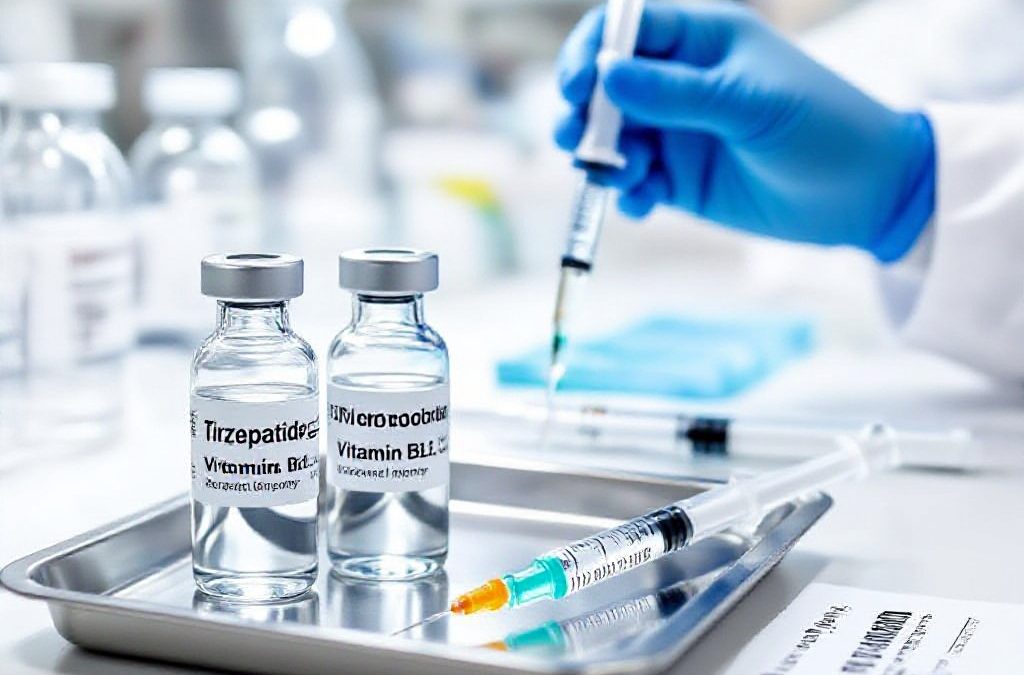
Many individuals seek compounded Tirzepatide with added Vitamin B12, but you should know these compounded drugs are not approved by the U.S. Food and Drug Administration (FDA). These unapproved products may carry greater risks than FDA-approved treatments such as Zepbound and Mounjaro. Eli Lilly has informed the FDA about findings concerning these untested products, recommending you contact your physicians to discuss alternative health treatment options.
Key Takeaways:
- Compounded tirzepatide with added vitamin B12 shows a concerning chemical reaction, forming an unknown molecule. The short- or long-term effects of this new molecule on human health, drug efficacy, toxicity, or immune reactions are completely unknown.
- Compounded GLP-1 medications, unlike FDA-approved drugs such as Zepbound and Mounjaro, do not undergo rigorous testing for safety and effectiveness. This lack of oversight means the precise composition and potential health risks of these altered formulations are untested.
- Lilly’s laboratory testing revealed inconsistent potency in compounded tirzepatide samples, with some containing a significantly less active drug than labeled. Patients using these products may not receive the intended therapeutic dose, which could impact treatment outcomes and overall health.
Chemical Reactions and Molecular Alterations
You may wonder about the actual chemical changes occurring when tirzepatide meets vitamin B12. Laboratory testing by Lilly discovered that this interaction produces a molecule larger than tirzepatide alone. This change could theoretically impact how the medication is absorbed, distributed, metabolized, or eliminated in the human body, potentially affecting your health.
Impact on drug distribution and metabolism
The increased molecular size of the altered tirzepatide could significantly affect its journey through your system. This change could theoretically impact how the medication is absorbed, distributed, metabolized, or eliminated, potentially altering its effectiveness and your health.
Uncertainties regarding efficacy and immune reactions
You face unknown risks regarding how your body will react to these altered molecules. The theoretical impact on drug distribution and metabolism raises serious questions about the medication’s intended efficacy and potential for unforeseen immune responses.
Considering the molecular changes, you must understand the potential for your immune system to perceive this larger molecule as a foreign substance. Your body might mount an immune response, potentially neutralizing the drug’s intended effects or even causing adverse reactions that could compromise your health. The lack of clinical data on these altered compounds means the long-term implications for your treatment and well-being remain entirely unknown.
Potency Inconsistencies and Safety Vetting
Your health is at risk when compounded tirzepatide samples show inconsistent potency. Testing revealed some samples contained as little as 43 percent of the drug amount listed, unlike FDA-approved medications, which undergo rigorous vetting to ensure correct recipes.
Risks of substandard drug concentrations
Receiving less than the prescribed dosage can render treatment ineffective, potentially delaying progress towards your health goals. Inconsistent concentrations mean unpredictable results for your body.
Comparisons between FDA-approved and copycat formulations
Choosing FDA-approved medications guarantees a rigorous vetting process ensures the recipe is followed correctly. Compounded versions do not undergo this same scrutiny, leaving you vulnerable to inconsistent quality.
| FDA-Approved vs. Compounded Formulations | |
|---|---|
| FDA-Approved Medications | Compounded Versions |
| Undergo rigorous vetting to ensure the recipe is followed correctly. | Do not undergo the same rigorous vetting process. |
You might wonder about the differences between these options. FDA-approved medications undergo a comprehensive vetting process to ensure every dose is consistent and safe for your health. This contrasts sharply with compounded versions, which do not receive the same stringent oversight to confirm the recipe’s accuracy.
Rationales and Risks of Vitamin B12 Additives
Exploiting the “personalized formulation” legal loophole
Compounders often add vitamin B12 (cobalamin) to create “personalized formulations.” This strategy allows them to offer lower-cost versions of tirzepatide, exploiting a legal loophole to address perceived fatigue.
Managing potential vitamin B12 toxicity symptoms
Megadoses of B12 can lead to toxicity, resulting in unpleasant side effects. You might experience headaches, nausea, diarrhea, vomiting, and flushing. Recognizing symptoms of vitamin B12 toxicity is necessary for your health. Experiencing symptoms like headaches, nausea, diarrhea, vomiting, or flushing after using compounded tirzepatide with added B12 should prompt immediate attention. Discontinuing the compounded product and consulting your healthcare provider is the safest course of action to protect your health.
Industry Perspectives on Testing and Sample Sources
Response from the compounding pharmacy community
The Alliance for Pharmacy Compounding (APC) reports no alarming trend of adverse events in four years of use for compounded tirzepatide. They question the origin of Lilly’s samples, suggesting products from unlicensed websites or med spas might not adhere to the rigorous standards of state-licensed pharmacies, potentially skewing results regarding product safety and your health.
Distinguishing between licensed pharmacies and medical spas
You should understand that products from unlicensed websites or med spas may not meet the standards of state-licensed pharmacies. The APC highlights a critical distinction, suggesting these alternative sources could be the root of any reported impurities, impacting your health and safety. Patients must recognize the significant difference between a state-licensed compounding pharmacy and other providers like medical spas or unlicensed online platforms. State-licensed pharmacies operate under strict regulations, including quality control measures and ingredient sourcing protocols, designed to protect your health. Conversely, the regulatory oversight for medical spas and unlicensed websites can be significantly less stringent, potentially leading to variations in product quality and purity, which could have serious implications for your well-being.
Navigating Treatment Alternatives and Costs
Narrowing price gaps for branded medications
Many obesity specialists now recommend you explore branded alternatives to compounded versions. These branded options have lowered in cost, sometimes becoming less expensive than compounded options, offering a safer, regulated path for your health.
Insurance coverage for comorbid health conditions
You may qualify for branded GLP-1s through your insurance. This coverage often applies for conditions like obstructive sleep apnea or type 2 diabetes, making regulated treatments more accessible for your health needs.
Patients with specific comorbid health conditions, such as obstructive sleep apnea or type 2 diabetes, are increasingly finding they qualify for insurance coverage of branded GLP-1s. This means you could access a regulated, thoroughly tested medication instead of a compounded version. Exploring these insurance avenues can lead to significant cost savings and provide greater peace of mind regarding the safety and efficacy of your treatment, directly benefiting your long-term health.
Conclusion
Considering all points, you should exercise caution regarding compounded tirzepatide with added vitamin B12. Experts urge caution because nothing is known about the short- or long-term effects of the new molecule produced by this interaction. You are encouraged to consult your healthcare provider about the safety profile of your medications and to prioritize treatments that have undergone rigorous regulatory oversight for your health.
Q: Why are compounded tirzepatide products with added vitamin B12 raising health concerns?
A: Lilly’s laboratory testing revealed a chemical reaction between tirzepatide and vitamin B12 when combined in compounded formulations. This reaction creates a new, larger molecule. Little is known about the short- or long-term effects of this new molecule in humans. There are also unanswered questions about its potential impact on the drug’s efficacy, toxicity, or immune reactions. The study also highlighted inconsistent potency in compounded samples, with some containing significantly less tirzepatide than indicated on the label. This lack of consistent dosage and the unknown properties of the new molecule pose significant health risks.
Q: What are the risks associated with using compounded GLP-1 medications, especially when they are not FDA-approved?
A: Compounded GLP-1 medications, unlike FDA-approved drugs such as Zepbound and Mounjaro, do not undergo the same rigorous vetting process for safety and effectiveness. If the “recipe” for a compounded drug deviates from the FDA-approved version, its safety and effectiveness cannot be guaranteed. In the case of compounded tirzepatide with vitamin B12, compounders have not provided data on the new molecule produced by the interaction, leaving its safety profile unknown. There is also a rare but possible risk of vitamin B12 toxicity from megadoses, which can lead to headaches, nausea, diarrhea, vomiting, and flushing. These factors underscore the potential health risks associated with non-FDA-approved compounded medications.
Q: What should individuals currently taking compounded Zepbound with vitamin B12 do, and are there safer alternatives?
A: Individuals using compounded GLP-1 medications should immediately consult their healthcare provider to discuss alternative treatment options. There are FDA-approved GLP-1 medications available. If affordability or insurance coverage for weight loss is a concern, individuals might qualify for a GLP-1 prescription if they have other conditions like obstructive sleep apnea or type 2 diabetes. The price gap between compounded and brand-name medications has also narrowed in some cases, with out-of-pocket options for branded medications sometimes being less expensive than compounded alternatives. Consulting a healthcare professional is the safest approach to ensure appropriate and effective treatment.
