
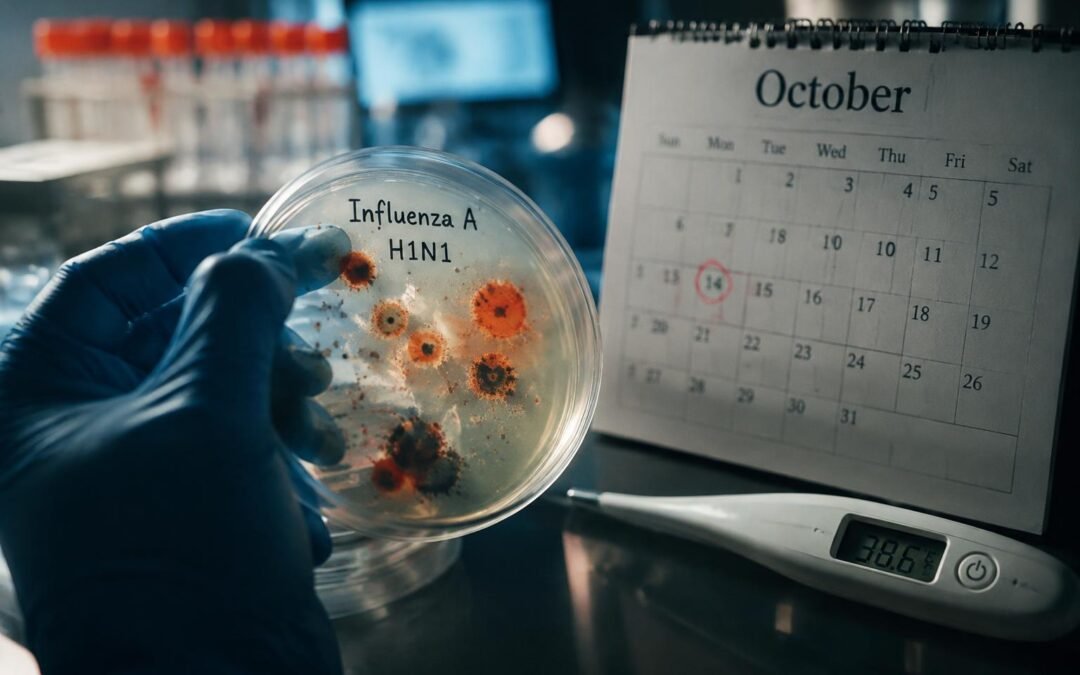
Flu is arriving early, and a new variant is already sickening thousands and sending many to the hospital. By late September, test positivity was about eight times higher than at the same point last year, according to Ryan Maves, MD, an infectious disease professor at Wake Forest School of Medicine in Winston-Salem, North Carolina.
Key Takeaways:
- Flu activity is rising earlier than usual, with cases and hospitalizations climbing; western states are seeing the increase before the regions that typically lead the season.
- The H1N1 mutation G155E may help the virus slip past some existing antibodies. Experts say there’s no evidence yet that it causes more severe illness than usual.
- Flu season is still building, and holiday gatherings could add to the spread. The current vaccine is expected to help protect against severe illness, even though it was made before the mutation emerged.
Flu’s Up Early, and the West Is Getting Hit First
For you, the unusual timing means local flu activity may be rising before the familiar seasonal pattern would suggest. The West is seeing cases first, while the CDC’s hospitalization data show a sharp national increase. Peter Chin-Hong, MD, an infectious-disease specialist and professor of medicine at the University of California San Francisco School of Medicine, says this westward-first start is unexpected. The usual route begins in the South, then heads northeast before spreading west.
What the latest hospital numbers show
CDC surveillance data show flu hospitalizations have more than doubled in a month, reaching more than 4,800 cases. That’s a steep change, even if you haven’t noticed a rise among people you know. Hospitalizations capture only the more serious end of flu illness; they don’t count every person staying home with fever, cough, or body aches. So a busy local clinic or an empty seat beside you at work may be part of a broader uptick.
Why this year’s geographic pattern is unusual
In a typical season, flu starts in southern states, moves northeast, and then spreads west across the country. This time, Chin-Hong says, West Coast states are being hit first, reversing that familiar sequence. That shift can make it harder for you to judge local risk by looking at what happened elsewhere earlier in the season. If relatives in the South haven’t seen much flu yet, that doesn’t mean your West Coast community is in the clear.
- Check your local clinic’s posted flu guidance before an appointment.
- Keep tissues and a thermometer where you can reach them at home.
- Stay home from work or school if you develop flu symptoms.
What’s Behind the New Flu Variant?
On the virus’s surface, scientists have identified a change called G155E in the H1N1 protein, Dr. Chin-Hong says. That detail matters because the surface is where antibodies try to latch on and stop the virus from entering your cells. For you, the finding points to a possible reason the variant can slip past some existing immune defenses, including protection carried over from last season or provided by vaccination. It doesn’t, by itself, mean the flu is causing worse illness.
How G155E may help the virus evade antibodies
Antibodies work by recognizing features on a virus and blocking it from infecting human cells. The G155E mutation changes the surface of the H1N1 protein, making that recognition harder. If you had the flu last season or received a vaccine, your antibodies may still recognize related viruses but may be less able to identify this mutated version. That’s an immune evasion advantage, not proof that your existing immunity offers no protection at all.
Why experts aren’t calling it a “super flu”
Dr. Chin-Hong describes G155E as a likely immune evasion advantage, not a sign of a “super flu” that causes more severe symptoms. So far, there’s no evidence people are getting more seriously ill than usual. The mutation may help explain how the virus avoids some antibodies, but that’s different from showing it causes harsher disease. If you’re watching for a change in severity, the evidence provided so far doesn’t point to one.
| Detail | What’s known | What it means for you |
|---|---|---|
| Mutation | G155E on the H1N1 protein’s surface | A change in a feature antibodies recognize. |
| Antibodies | Recognition and blocking may be harder. | Past or vaccine immunity may recognize the variant less well. |
| Severity | No evidence so far of more serious illness than usual | Immune evasion doesn’t establish a “super flu.” |
Could Japan’s Early Mutation Explain the Rise in the West?
A flu wave in Japan linked to the G155E mutation may offer part of the explanation for rising cases in the western United States, says Thomas Russo, MD, an infectious diseases expert at SUNY Buffalo’s Jacobs School of Medicine and Biomedical Sciences. Russo points to the West’s position as the first U.S. stop eastward from Japan. For you, that connection is a possible clue, not proof of how any one infection traveled.
How international travel may connect Japan and the West
Russo says international travel may partly account for the early rise in western U.S. cases after the flu wave in Japan. The western states are the first stop on the route eastward from Japan, so an infected traveler could carry flu across the Pacific before it spreads farther inland. That’s a plausible link, not confirmation that every new case came from Japan. If you’re tracking the mutation, keep that distinction in mind.
The virus is spreading beyond the West Coast
The increase isn’t confined to the West: flu is gaining ground across the continental United States. In Buffalo, Russo says more people are testing positive and landing in the hospital, a sign that you’re seeing a broader rise rather than a coastal pattern alone. The reported increase doesn’t establish that G155E is driving every case, but it does show why clinicians are watching both test results and hospital admissions.
- G155E is the mutation named in the Japan-linked flu wave.
- Thomas Russo, MD, is based at SUNY Buffalo in New York.
- The proposed travel connection is described as a partial explanation.
Why Could Younger People Have a Rougher Season?
Your age may shape how well your immune system recognizes this circulating mutated H1N1 strain, though it can’t predict exactly how sick you’ll get. Russo points to differences in existing flu immunity, not a guarantee that younger people will have severe illness. For a teen or someone in their twenties, the strain may be less familiar to the body; an older adult may have encountered influenza viruses that left antibodies offering partial protection.
What the age-group antibody findings suggest
In tested blood serum samples from different age groups, teens and people in their twenties had significantly less ability to neutralize the mutated virus than older people. That’s a laboratory finding about how antibodies respond, not a forecast of symptoms for every person in those age groups. If you’re younger, it suggests you may have less natural flu immunity against this strain, even if you’ve had influenza before.
Why older adults may have some cross-protection
Russo says older adults have generally encountered more influenza viruses over their lives, making them more likely to carry prior antibodies that can offer some cross-protection. Those antibodies might recognize parts of a new variant even if it has changed. Think of it as partial familiarity, not a shield: an older person can still catch flu, while a younger person’s lower neutralization in the tested samples doesn’t mean they’ll definitely have a rough season.
| Group | Finding described by Russo |
|---|---|
| Teens | Tested serum showed less ability to neutralize the virus than older groups. |
| People in their twenties | Tested serum also showed significantly less neutralization than older groups. |
| Older adults | More prior influenza exposure may mean antibodies with some cross-protection. |
Should You Get Your Flu Shot Now?
Yes, getting vaccinated now can still make sense: Russo expects illness and hospitalizations to rise in the weeks ahead, and flu season is well short of its peak. Holiday gatherings in enclosed spaces and increased air travel may speed transmission, so public health authorities are urging you to act now. If you’re deciding whether to get vaccinated, the timing matters: protection takes time to build, while more exposure may be coming.
What the vaccine can still do
The 2026-2027 flu shots were formulated before the G155E mutation emerged, but that doesn’t mean they’re useless. The CDC still expects them to provide significant protection against severe illness this year. For you, vaccination may help lower the risk of a dangerous bout of flu, even if it can’t guarantee you won’t catch the virus. If you haven’t had your shot, ask a clinician or pharmacist about getting it soon.
Everyday steps to help limit spread
Dr. Maves suggests considering a mask in crowded indoor settings, such as a packed train or busy waiting room, and washing your hands more often, especially before eating. Try to keep your distance from people who are sick with flu, too. Those steps matter as holiday gatherings and increased air travel bring more people together indoors. Protecting yourself also helps protect others, including anyone at home who may face greater risks from flu.
- Keep tissues handy for coughs and sneezes.
- Cover coughs with your elbow, not your hands.
- Clean frequently touched items such as phone screens.
How Bad Could Flu Symptoms Actually Get?
Flu can be mild enough for you to manage at home, yet serious enough to disrupt breathing or worsen an existing condition. The early start alone doesn’t show that this season will be more dangerous, but the illness can still become severe, particularly for people already at higher risk. Pay attention to how symptoms affect your body, not just how they compare with someone else’s experience; serious warning signs deserve prompt attention.
What experts know about severity so far
Chin-Hong says there’s no evidence so far that this early flu season will cause more severe illness or bring unique symptoms. That’s reassuring, but it isn’t a reason to dismiss flu: every year, it kills tens of thousands of Americans. It can also cause serious pneumonia, worsen heart or lung disease, and, in rare cases, affect the brain. Hospitalizations and deaths are more likely among vulnerable people, so a familiar fever can still turn serious.
When to seek immediate professional care
Most people recover at home with self-care, such as resting and keeping up with fluids. But if your symptoms become serious or you’re struggling to breathe, seek immediate professional medical help rather than waiting it out. Chin-Hong says severe symptoms may require hospitalization. The risk of complications is especially concerning if you’re vulnerable or already have heart or lung disease; worsening breathing or a sudden change in your condition calls for prompt attention.
| Situation | What to know | Next step |
|---|---|---|
| Mild illness | Most people recover at home. | Use self-care and monitor symptoms. |
| Serious symptoms | Flu can cause pneumonia or worsen heart and lung disease. | Get immediate professional medical help. |
| Severe illness | Hospitalization may be needed. | Seek urgent medical assessment. |
Summing up
The early spread of flu, with cases hitting the West first, gives you a reason to take prevention seriously now. The G155E mutation may help the virus evade some existing immunity, but experts haven’t found evidence that it causes more severe illness. Get vaccinated, and take practical steps such as staying home when you’re sick to protect others. Cases and hospitalizations may rise in the weeks ahead, so keep an eye on local updates and don’t wait to act.
FAQ
Is the new flu mutation making this season more dangerous?
The mutation may help flu evade some existing antibodies, but there’s no evidence so far that it causes more severe illness. How sick someone gets can still depend on factors such as age, underlying conditions, and immune protection.
Is it still worth getting a flu shot if the virus has mutated?
Yes, a flu shot can still help protect against flu and reduce the risk of severe illness. Protection may be less well matched to a mutated virus, and the vaccine takes time to build protection, so ask a healthcare professional about timing if you’re unsure.
When should I seek urgent care for flu symptoms?
Seek immediate professional care for severe symptoms, such as trouble breathing, chest pain, confusion, or signs of dehydration. Flu can become serious, especially for people at higher risk, and a clinician can advise you based on your symptoms and health conditions.
