
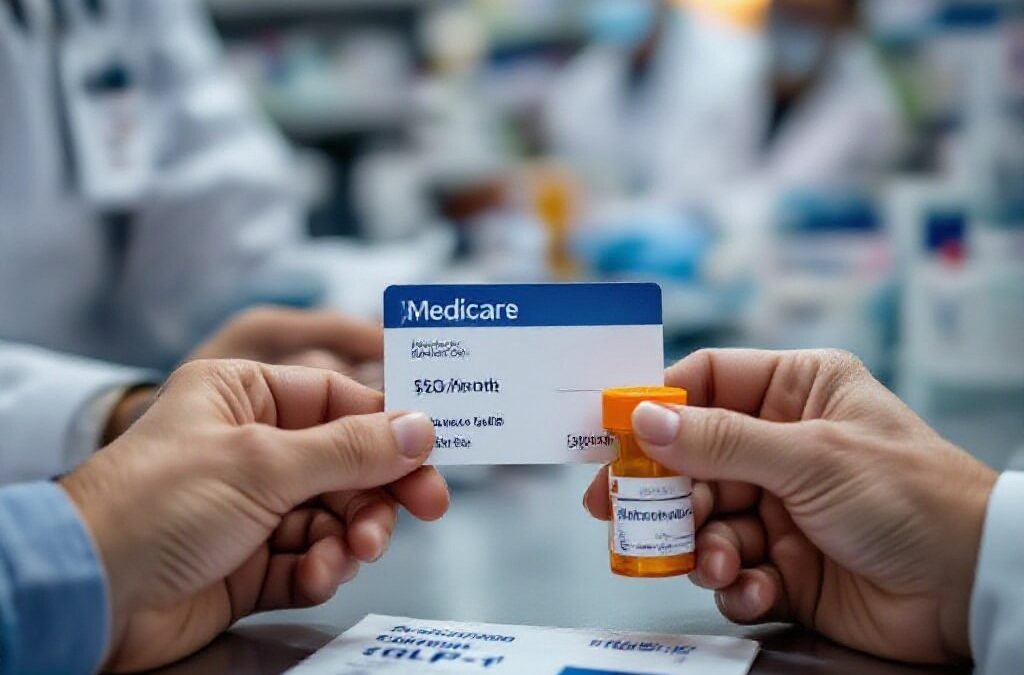
Most of you know the struggle, right? Getting weight loss drugs covered by Medicare has been a real headache. But soon, you could be paying just $50 a month for certain weight loss medications through the new Medicare GLP-1 Bridge Program! This program is a temporary game-changer for your health, offering a huge positive step in making these life-changing drugs accessible, though you should know it isn’t permanent.
Key Takeaways:
* So, what’s the big deal with this new program, anyway? Starting July 1, 2026, some Medicare folks can get certain weight loss GLP-1 medications for just $50 a month. That’s a huge drop from the usual $1,300, and doctors are saying it’s “absolutely fantastic” for patient health. It’s a temporary “Bridge program,” though, and doesn’t change Medicare’s general rule against covering weight loss drugs.
* Are you wondering if you’ll actually qualify for this sweet deal? Well, you need to be 18 or older and have a Medicare Part D or Medicare Advantage plan with drug coverage. It’s important to know this program runs separately from standard Medicare, meaning the $50 copay doesn’t count towards your Part D out-of-pocket cap of $2,100, and other federal assistance won’t lower it. Still, $50 is a steal for these medications, don’t you think?
* What happens when the music stops after 18 months? This “Bridge program” is a big step for the federal government’s view on obesity health, but its short-term nature has doctors a little worried. Patients often regain weight if they stop GLP-1s, so there’s no clear long-term plan for Medicare beneficiaries. If you’re considering it, get evaluated by your healthcare provider now, because demand is expected to be high, and who knows what the future holds?
What’s the real deal with this $50 program?
You might be thinking this is a permanent game-changer, but hold on a sec. Beginning on July 1, 2026, the GLP-1 Bridge program allows certain Medicare members to pay only $50 monthly for weight loss drugs that usually cost a whopping $1,300. This isn’t a permanent shift in the law, though; it’s officially a payment demonstration, not a full change to the rule that stops Medicare from covering these meds. While Dr. Nancy Nielsen calls it “life-changing,” you should know this is a historic but temporary move in how the government approaches obesity health.
Why this is a huge win for patients
Imagine paying just $50 a month for a drug that could cost you $1,300. This program offers select Medicare members access to life-changing weight loss medication, a massive financial relief. It’s a significant step toward improving health outcomes for many.
The truth about the “payment demonstration” status
Some people might think “demonstration” means it’s just a formality, but you need to understand it’s not a permanent change to the law. This is a temporary program, a test run, to see how things shake out.
This “payment demonstration” status is super important because it means the underlying law, the one that prohibits Medicare from covering weight loss medications, hasn’t actually changed. It’s like a trial period. The government is observing the program’s effects and costs, which means there’s no guarantee it’ll become a permanent fixture. So, while it’s fantastic for those who can get in, keep in mind this historic shift in obesity treatment is still very much in a temporary phase.
Who’s actually going to qualify for this?
Wondering if you fit the bill for this awesome program? You need to be at least 18 years old and already have a Medicare Part D prescription drug plan or a Medicare Advantage plan that includes drug coverage. But hold on, if you’re already using GLP-1s for conditions like diabetes or liver disease, you won’t switch to the Bridge program; you’ll stick with your current Part D benefits.
Age and insurance plan requirements
So, what are the basic hurdles to clear? You must be at least 18 years old and actively enrolled in a Medicare Part D prescription drug plan or a Medicare Advantage plan that includes drug coverage.
Why diabetes patients aren’t included here
Are you curious why those with diabetes aren’t part of this new initiative? If you’re currently taking GLP-1s for other health conditions, like diabetes or liver disease, you’ll simply stay on your original Part D coverage.
This program is specifically designed to bridge a gap for those who haven’t had access to these medications for weight loss before. If you’re already prescribed GLP-1s for diabetes, your existing Medicare Part D plan should cover them, so you’re already in a good place regarding medication access for your health needs. The Bridge program isn’t meant to replace existing coverage, but rather to expand it to a new group of beneficiaries.

Breaking down the finances and the fine print
Why it doesn’t count toward your out-of-pocket cap
Many folks assume all drug costs count, but this $50 copay is completely separate from Part D. Your payments won’t contribute to the health plan’s $2,100 out-of-pocket cap or your True Out-of-Pocket (TrOOP) spending limits. It’s an important distinction for your budget!
The rules on deductibles and federal assistance
You’ll still owe the $50 even after meeting your Part D deductible. And here’s another thing, federal “Extra Help” assistance? It won’t reduce that $50 monthly charge.
Thinking about your budget, it’s easy to assume that once you’ve hit your Part D deductible, all subsequent drug costs get cheaper or even disappear. But with this program, that’s not the case. You’ll continue to pay the flat $50 monthly copay for your weight loss medication, regardless of whether you’ve already satisfied your Part D deductible for other prescriptions. This means you need to factor this consistent cost into your health spending. And for those who rely on federal “Extra Help” to manage their medication expenses, it’s tough news: this specific $50 charge is not eligible for that assistance, so you’ll be responsible for the full amount.

Conclusion
To wrap up, you can see the Medicare GLP-1 Bridge program marks a significant step, offering these transformative weight loss medications for just $50 a month. You should understand this is a demonstration, not a permanent coverage change, but it provides an incredible opportunity for improved health. Get evaluated by your healthcare provider soon; this program could make a real difference in your health journey.
FAQ
Q: How will the Medicare GLP-1 Bridge Program make weight loss medications more affordable for beneficiaries?
A: Starting July 1, 2026, the new Medicare GLP-1 Bridge program will allow eligible Medicare members to pay just $50 per month for specific weight loss medications. This is a huge shift, considering some of these medications can cost upwards of $1,300 monthly. Dr. Nancy Nielsen, a senior associate dean for health policy at the Jacobs School of Medicine and Biomedical Sciences, calls this “absolutely fantastic” because of how life-changing these medications are for patients. It’s a temporary program, though, so it doesn’t permanently change Medicare’s underlying policy on weight loss drug coverage.
The program runs separately from standard Medicare Part D. You’ll still pay that $50 copay even if you’ve met your Part D out-of-pocket cap of $2,100, and federal assistance like “Extra Help” can’t be used to reduce it. Still, paying $50 for a medication that typically costs so much more is a remarkable deal for health and well-being.
Q: Who is eligible for the Medicare GLP-1 Bridge Program, and what medications will be covered?
A: To qualify for this program, you need to be 18 or older and enrolled in a Medicare Part D prescription drug plan or a Medicare Advantage plan that includes drug coverage. There’s a specific Body Mass Index (BMI) requirement too: you must have a BMI of 30 or higher, or a BMI of 27 or higher with at least one weight-related health condition like high blood pressure or high cholesterol. It’s important to know that if you’re already taking GLP-1s for other conditions, like diabetes or liver disease, you’ll continue to use your original Part D coverage for those.
The program will specifically cover GLP-1 medications prescribed for weight loss. While the full list isn’t here, it’s those specific drugs approved for that purpose. If you’re wondering if you qualify, Medicare has an online checklist that can help you figure it out.
Q: What are the long-term implications and potential challenges of the Medicare GLP-1 Bridge Program?
A: This program marks a significant moment, showing a shift in how the federal government views obesity treatment for Medicare beneficiaries. However, it’s only set for 18 months, and what happens after that is still up in the air. Dr. Thomas Tsai, an associate professor of health policy at Harvard, points out that the short-term nature could be a problem. Many patients often regain a lot of weight if they stop taking GLP-1 medications, so there’s concern about whether long-term access will be available for Medicare beneficiaries.
Dr. Nielsen expects demand for the program to be really high. She suggests seeing your healthcare provider soon for an evaluation. She hopes the program will continue beyond 18 months, calling it “an amazing thing” and saying she “can’t say enough good things about this.” The biggest question remains: how will Medicare ensure sustained access to these important medications once the bridge program concludes?
