
Key Takeaways:
- You might not realize it, but that musty smell when you turn on your AC could be mold growing on the cooling coils, especially in humid areas where condensation builds up and creates a perfect breeding ground. And yes, it’s more common than you think.
- Mold in your air conditioner isn’t just gross; it can affect your health, especially if you already deal with allergies or asthma. Breathing in mold spores over time might lead to coughing, sneezing, or even more serious respiratory issues you can’t seem to shake.
- Cleaning the unit helps, but if you don’t fix the moisture problem, the mold will just come back. Regular maintenance, better filters, and proper drainage go a long way in keeping your air clean and your health protected because no one wants to cool off with a side of fungus.
Why does mold actually love your AC unit?
It’s no secret your AC runs constantly during summer, especially if you’re sweating it out in the eastern U.S., where humidity clings to the air like a wet towel. That sticky moisture isn’t just uncomfortable; it’s a five-star hotel for mold. Because every time your unit kicks on, water condenses on the cooling coils, just like Dr. Jordan Peccia from Yale University explained. This dampness doesn’t stay put; it spreads to fans and other parts, giving mold the perfect breeding ground.
The humidity problem in the eastern U.S.
Living in the eastern U.S. means dealing with sweltering summers and air so thick with moisture it feels like breathing in soup. This constant humidity creates ideal conditions for mold, especially inside your AC. When warm, wet air hits the cold coils, condensation forms nonstop, turning your unit into a damp playground for spores. And if you’re not careful, that mold can affect your health without you even knowing.
Why cooling coils and fans are trouble spots
Cooling coils are where it all starts: cold surfaces meet warm air and instantly create condensation. Dr. Jordan Peccia points out this wet environment doesn’t just sit there; it spreads to nearby components like the fan. These parts stay damp even after the unit cycles off, giving mold a dark, moist hideout. Once it takes hold, spores can blow straight into your living space with every cool breeze.
Think of your cooling coils as a magnet for moisture every time your AC runs, they sweat like you do on a muggy day. That constant dampness attracts mold like a beacon, and because airflow pushes that moisture toward the fan assembly, both parts become contamination hotspots. Since these areas are hidden behind panels, mold can grow undisturbed for months. And when it does, every breath you take could be carrying spores that impact your health especially if you’ve got allergies or respiratory concerns.
How can you tell if there is mold hiding in there?
Spotting mold in your AC unit isn’t always obvious, but ignoring it can seriously impact your health. Health issues like sneezing, coughing, or itchy eyes might flare up when the system runs, especially if you already deal with allergies. Your HVAC system circulates air throughout your home, so when mold grows inside, it spreads spores with every cycle.
Sniffing out the problem
You know that musty, damp smell after turning on your AC? That’s often mold breathing down your neck. If your house smells like a basement or wet socks every time the unit kicks on, don’t brush it off. Your nose is picking up microbial activity-likely mold thriving in the moisture-heavy parts of your system.
Visual cues in those dark crevices
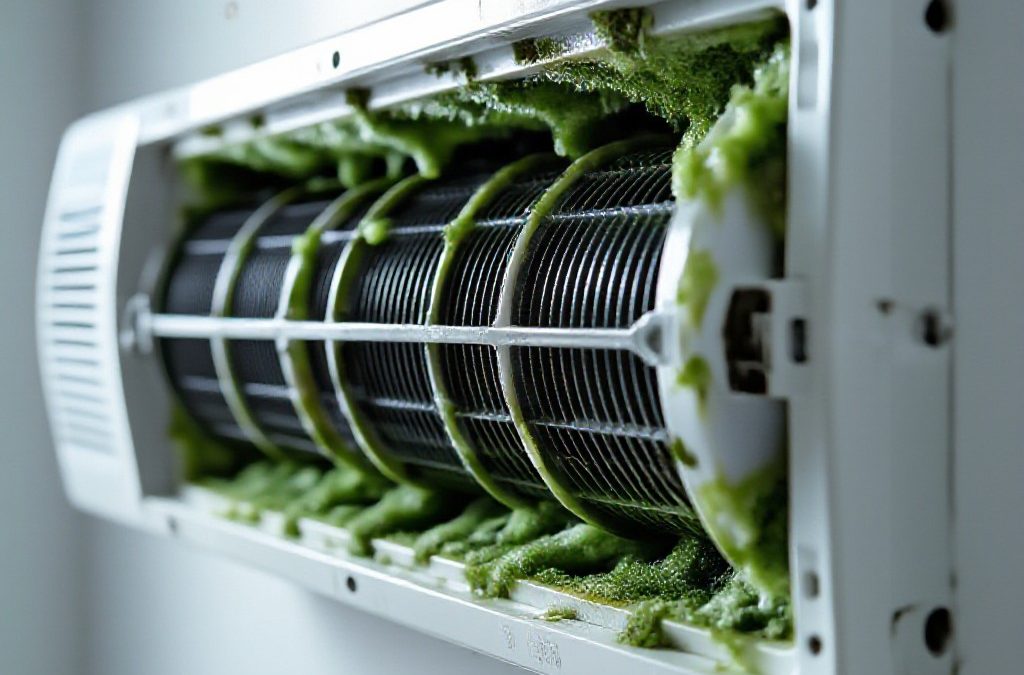
Black, green, or gray spots around the air handler or drain pan mean trouble. Mold loves dark, damp spaces, and your AC’s interior is basically a five-star resort for spores. If you peek inside and see fuzzy or slimy growths, especially near the evaporator coil, don’t touch it. That’s not dirt. That’s active mold colonization.
And yeah, it’s gross, but more importantly, it’s dangerous. The evaporator coil, drain line, and drip pan are common hotspots because condensation builds up there daily. According to experts, homes in humid climates see mold in AC units up to 30% more often. Left unchecked, those slimy patches release spores into your air every time the fan runs, directly affecting your health. Health risks range from mild allergy flare-ups to serious respiratory irritation, especially in kids or people with asthma.
Seriously, how does mold make you feel sick?
Mold releases tiny spores into the air that you can’t see but your body definitely notices. When inhaled, these spores can trigger allergic reactions and irritate your respiratory system, especially if you’re sensitive or have existing health conditions. Over time, constant exposure from a moldy AC unit may lead to persistent coughing, headaches, or fatigue, even if you don’t know why.
When to check in with a doctor
Symptoms that just won’t quit? If you’ve been feeling off for weeks, especially if it gets worse when you’re home, it’s time to talk to a professional. Your health could be quietly suffering from mold exposure, and only a doctor can help connect the dots.
Symptoms that just won’t go away
You sneeze every afternoon when the AC kicks on, and it’s been happening for weeks. That’s not just allergies. Persistent coughing, itchy eyes, or unexplained fatigue could be signs your air conditioner is circulating mold spores. These aren’t random glitches; they’re red flags.
And here’s the thing: mold symptoms often mimic colds or seasonal allergies, so they’re easy to brush off. But when they last longer than they should, say, more than a few weeks, and there’s no clear cause, mold could be the hidden culprit. Especially if you notice a musty smell near vents or your symptoms improve when you leave the house. That pattern matters. It’s not in your head; it could be in your air. And your health deserves better than that.
What is the best way to clean your AC?
When mold takes hold in your air conditioner, simply wiping it away isn’t enough-you’ve got to go deep. You must clean it up and fix the moisture issue so it does not grow back. Following safe cleanup procedures is crucial to ensure the mold is gone for good, protecting your home and your health.
Following safe cleanup procedures
You can’t just scrub and walk away; mold spores are sneaky and can linger in hidden spots. Wear gloves and a mask, turn off the unit, and use a mix of detergent and water to clean accessible parts. Make sure you dry everything completely afterward. Skipping steps might leave behind traces that could affect your health.
Why you have to fix the moisture issue too
Mold doesn’t grow without a reason; moisture is its best friend. If your AC is leaking, draining poorly, or condensation isn’t evaporating, you’re basically rolling out a welcome mat. Clean today, but ignore the dampness? You’ll be back at square one in days.
Think of it like mopping a flooded floor without turning off the faucet. It doesn’t matter how thoroughly you clean; if water keeps pooling inside the unit, mold will return, fast. Common culprits include clogged drain lines, low refrigerant levels causing frozen coils to thaw and drip, or poor airflow leading to excess condensation. Fixing the root cause isn’t optional; it’s the only way to keep your system clean and your health protected long-term.
Can you actually stop mold before it starts?
You don’t have to wait for musty smells or visible black spots. Mold in your AC unit is preventable. The easiest way to keep a unit free of mold is to drain away water as much as possible and install a better filter. Dr. Peccia notes that better drainage keeps the inside of the unit drier, which prevents a moldy environment from forming. You’ve got more control than you think.
Why you need a better air filter
A standard filter might let mold spores slip right through. Upgrading to a better air filter means trapping more of those tiny particles before they settle inside your unit. Think of it like a bouncer for your AC, keeping the riffraff out. Cleaner air means better health, and fewer chances for mold to take hold where you can’t see it.
Keeping things dry with better drainage
Water loves to hang around in drip pans and drain lines, which is perfect for mold. But when you improve drainage, you’re cutting off its favorite hangout spot. Dr. Peccia points out that better drainage keeps the inside of the unit drier, which prevents a moldy environment from forming. Less moisture? Less mold.
Ever left a towel in the bathroom after a shower and come back to a funky smell? That’s mold getting cozy in dampness. Your AC is no different. If the drain line is slow or the pan doesn’t empty fully, you’re basically running a mold nursery. Fixing slope issues, cleaning lines regularly, and even installing a condensate pump can make a huge difference. Keep it draining, keep it dry; mold doesn’t stand a chance.
Final Words
Considering all points, could your AC be making you sick without you even knowing? Mold in your air conditioner isn’t just gross; it can impact your health, especially if you’re sensitive or exposed long-term. You don’t need a lab test to act Dr. Asal Naderi and Dr. Jordan Peccia both stress keeping the unit dry and watching for signs. If you’re coughing, sneezing, or feeling off… and it gets worse indoors? That’s your cue. Protect your health clean regularly, and talk to a doctor if symptoms stick around.
