
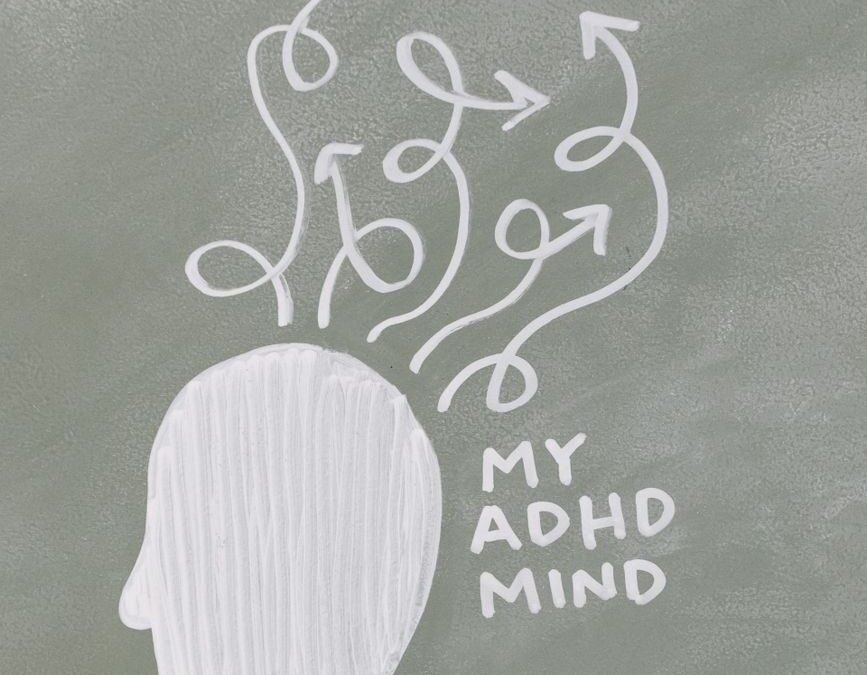
ADHD: Why do women get missed out?
Why’s it taking so long for us to get answers?
Waiting for an ADHD diagnosis can feel endless, especially for women. You’re trying to figure out what’s going on, and the current medical systems are often failing to accurately identify women, which means you might be waiting even longer. It’s a frustrating cycle, isn’t it?
The five-year gap we need to talk about
It’s pretty shocking, but research shows women with ADHD receive their diagnosis an average of 5 years later than men. Think about all that time you could have been getting the right support!
Is it just anxiety or something else?
You’re probably not alone if you’ve been told it’s “just anxiety.” Many women are misdiagnosed with anxiety or other mental health conditions before a specialist finally identifies the ADHD.
It’s almost like doctors are looking for everything *but* ADHD when it comes to women, right? You go in with your symptoms, and they might point to anxiety or even depression, which can definitely feel like part of the picture. But so many women find themselves on a merry-go-round of different diagnoses, trying various treatments for conditions they don’t actually have, all before someone takes a closer look and realizes, “Hey, this is ADHD.” It’s incredibly frustrating and can prolong your struggle for appropriate health care.
ADHD: Why do women get missed out?
Honestly, we’re just really good at hiding it
You know, it’s wild how early girls learn to camouflage their struggles. We internalize what’s “socially acceptable” and what’ll land us in hot water, so many of us become masters of disguise, especially when it comes to our health. You might be struggling to pay attention, but you’re still putting on a show of focus.
The art of performing focus
Imagine being a little girl, desperately trying to appear engaged. Many girls perform focus to avoid being labeled a “bad student,” even when their minds are miles away. It’s a survival mechanism, really.
How we learn to mask our struggles early on
From a young age, girls are taught to fit in, to be quiet, to be agreeable. This often means suppressing natural inclinations that might be signs of ADHD, like restlessness or impulsivity. We learn that certain behaviors are rewarded, and others are punished.
Think about it: you’re in class, your mind is buzzing, but you know if you fidget or speak out, you’ll get in trouble. So, what do you do? You sit still. You pretend to listen. Daydreaming, for instance, becomes a common way the condition manifests in girls who are trying to fit in – a silent escape when the world demands an attention you just don’t have. It’s not about being defiant; it’s about trying to survive school and social situations without drawing negative attention to yourself. This early masking is why so many women don’t get the health support they need until much later in life.
ADHD: Why do women get missed out?
The real deal with the autism overlap
You might be surprised to learn that for a long time, the medical community didn’t even acknowledge you could be both autistic and have ADHD. It wasn’t until 2013 that this combination was officially recognized, which really highlights how much we’re still learning about neurodivergence.
Why 2013 was a huge year for neurodiversity
Think about it: before 2013, doctors basically said you couldn’t be both. This official recognition was a game-changer for understanding how different neurodivergences massively overlap, proving those strict “either/or” categories are just unhelpful.
Birds of a feather: Finding your neurodivergent tribe
It’s no coincidence that neurodivergent people often find each other. You’ll see them flocking together in friend groups and even marriages, creating supportive communities where they truly belong.
You’ve probably noticed it yourself – those connections where you just *get* each other. This natural gravitation towards others with similar brain wiring isn’t just anecdotal; it’s a common observation. When you share a neurodivergent experience, whether it’s ADHD, autism, or a combination, there’s an inherent understanding that can make forming friendships and even romantic relationships feel incredibly natural and affirming. It’s about finding your people, where your unique way of processing the world is celebrated, not misunderstood. This kind of social health is so important!
ADHD: Why do women get missed out?
Why haven’t the professionals seen us?
When the experts are late-identified too
You might wonder why professionals haven’t caught on sooner. Many psychologists, it turns out, are only now discovering their own neurodivergence or that of their children. This personal journey often opens their eyes to signs they previously missed, making a huge difference in understanding women’s health.
Why we’re finally moving past unhelpful binaries
The historical lack of recognition for ADHD in women stems from professionals not recognizing the signs. You see, the typical presentations often focused on hyperactive boys, leaving quietly struggling girls largely undiagnosed. But things are changing, thankfully.
For years, the understanding of ADHD was really narrow, mostly based on how it presented in boys. This meant that if you didn’t fit that specific mold – if you weren’t bouncing off the walls or constantly interrupting – you were often overlooked. Professionals simply didn’t recognize the more subtle, internalized signs prevalent in women, like inattentiveness or anxiety. Now, with more awareness and psychologists discovering their own neurodivergence, or that of their children, there’s a much broader understanding emerging. This shift is necessary for people, including you, to finally understand themselves both personally and professionally, and get the accurate health support you deserve.
Summing up
You can see women often spend years wondering why they feel different, and it’s all because of outdated ADHD stereotypes. We’ve got to break those down. Neurodivergent people have always been here, and they deserve proper identification. That’s the real first step toward getting them the better health support they need.
Here are some detailed FAQ questions and answers about ADHD in women, following your specific instructions:
Q: Why do women often receive an ADHD diagnosis much later in life compared to men?
A: Women generally experience significant delays in getting an ADHD diagnosis, sometimes years after their male counterparts. This happens for a few big reasons. Firstly, the classic image of ADHD, the one many people still have in their heads, is often based on hyperactive young boys. Think about it – lots of bouncing off the walls, interrupting, trouble sitting still. Girls and women, though, often present with what we call ‘inattentive’ ADHD, which looks very different. They might be quiet daydreamers, struggling with internal restlessness, disorganization, or difficulty focusing, but not necessarily displaying outward hyperactivity. This quieter presentation often gets missed because it doesn’t fit the stereotypical mold.
There’s also a strong social component. Girls are often taught from a young age to be ‘good girls’ – to be polite, to please others, and to suppress behaviors that might be seen as disruptive. So, a girl with ADHD might learn to ‘mask’ her symptoms really well, working extra hard to appear focused or organized even when she’s really struggling inside. This masking can be incredibly draining but makes it much harder for parents, teachers, or even health professionals to notice anything is amiss. By the time women reach adulthood, the cumulative effects of undiagnosed ADHD can lead to other health issues like anxiety or depression, which then get misdiagnosed, further delaying the correct ADHD identification.
Q: How does ADHD typically manifest in girls and women, and why is this often overlooked in traditional diagnostic criteria?
A: ADHD in girls and women usually presents quite differently from the ‘classic’ portrayal, and this is exactly why it’s so often overlooked. While boys might show more externalized hyperactivity – running around, fidgeting, being impulsive – girls are more likely to exhibit internal struggles. You’ll often see inattentive symptoms like difficulty sustaining attention, being easily distracted, forgetfulness, or struggling with organization. They might spend hours on homework, not because they’re bad students, but because their brain struggles to filter out distractions and maintain focus, leading to extreme mental exhaustion.
Girls might also internalize their hyperactivity; instead of physical restlessness, they might experience a racing mind, constant thoughts, or a feeling of internal ‘buzz.’ This can manifest as excessive talking, overthinking, or even anxiety. The current diagnostic criteria, historically based on research with predominantly young boys, don’t always fully capture these nuanced, often internalized presentations. This means many girls and women don’t ‘tick’ enough of the boxes to meet the criteria, even though they’re experiencing significant challenges. They might get mislabeled as shy, anxious, or just ‘dreamy,’ when in reality, it’s ADHD at play.
Q: What are the long-term impacts of late or missed ADHD diagnoses for women, and how can awareness improve outcomes?
A: A late or missed ADHD diagnosis for women can have really significant and lasting impacts across their whole lives. Think about it: years of struggling without understanding why. This can lead to chronic feelings of inadequacy, low self-esteem, and a belief that something is inherently ‘wrong’ with them. Women might develop coping mechanisms that, while seemingly helpful in the short term, are actually incredibly draining – like perfectionism, people-pleasing, or overcompensating in certain areas, which can lead to burnout and chronic stress.
Without an ADHD diagnosis, women are also at a higher risk of developing co-occurring health conditions, such as anxiety disorders, depression, eating disorders, or substance use issues, as they try to manage their undiagnosed symptoms. Relationships can suffer, academic or career potential might not be fully realized, and daily life can feel like an uphill battle. Increasing awareness about how ADHD presents in women is absolutely critical. When health professionals, educators, and the general public understand these different presentations, women can get diagnosed earlier. An early diagnosis means access to appropriate support, strategies, and sometimes medication, which can dramatically improve their quality of life, boost self-understanding, and help them thrive instead of just survive.
