
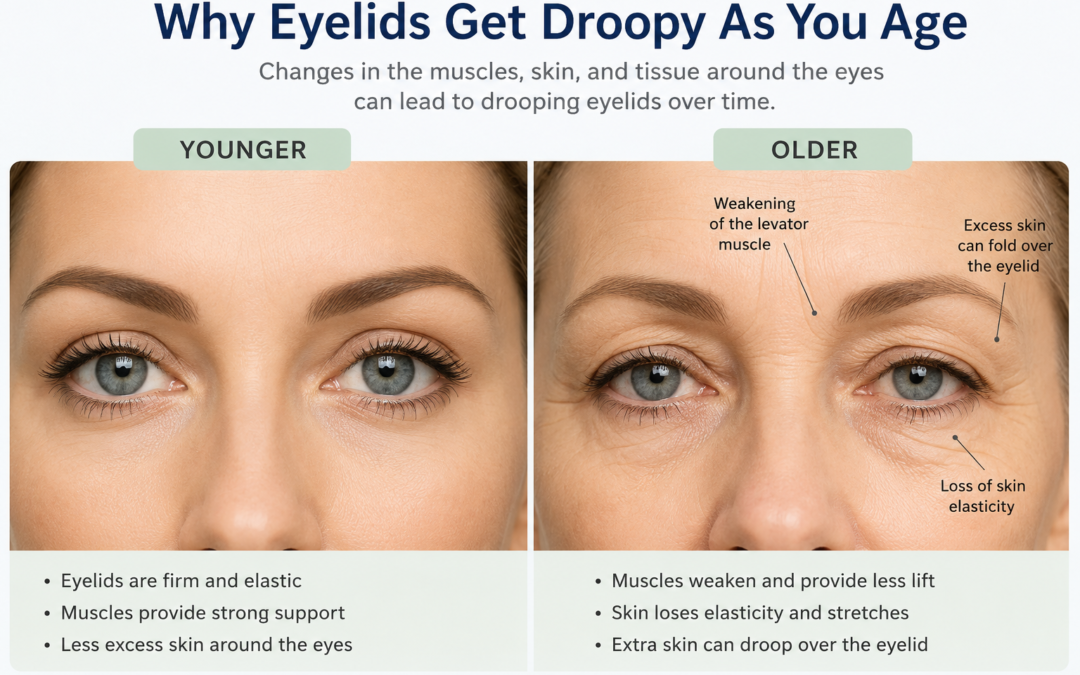
Over time, you might start seeing droopy eyelids in photos – maybe your upper lids just sit a little lower, or you’ve got extra skin folding over the crease. This is often just a cosmetic thing, you know, aging and gravity doing their work. But sometimes, it can actually block your vision, and that’s when you really need a doctor to figure out if it’s more than just aesthetics, distinguishing it from a medical problem affecting your health.
Why are my eyelids actually sagging?
You’re probably wondering what’s really going on up there, right? Age-related drooping typically falls into three main categories: ptosis, where your eyelid sits too low; dermatochalasis, which is just extra skin; and brow ptosis, where your eyebrow starts to drop. Most folks, honestly, experience a mix of all three, particularly that sagging eyebrow and the extra skin.
The difference between skin and muscle
Your eyelids can droop because of extra skin, called dermatochalasis, or because the actual lid muscle (levator palpebrae superioris) isn’t working right, which is ptosis. Knowing the difference helps pinpoint the best solution for your specific health needs.
When your eyebrows start to drop
Sometimes, the real culprit isn’t your eyelid at all, but your eyebrow. Brow ptosis happens when your eyebrow starts to descend, making your upper eyelid appear much heavier and more droopy than it actually is. It’s a common factor in overall facial aging.
When your eyebrows start to drop, it can really change the entire look of your upper face. This condition, brow ptosis, contributes significantly to that tired, aged appearance many people notice as they get older. It’s not just about the skin around your eyes; the position of your eyebrow plays a huge role in how open and alert your eyes look. You might find yourself constantly trying to lift your brows, which just makes you wrinkle your forehead even more – not exactly ideal for your long-term health or appearance!
Honestly, it’s not just about your age
You might think drooping eyelids are just an inevitable part of getting older, right? Well, it’s a bit more complicated than that. While age plays a role, other forces are constantly at work, often making the problem worse as your day goes on.
How your daily habits affect your eyes
Your daily routine can really impact your eyelid health. Things like smoking and too much sun exposure damage that delicate skin around your eyes, leading to more sagging. So, what are you doing to protect your eyes?
The surprise impact of contact lenses and eye rubbing
Believe it or not, something as common as wearing hard contact lenses can contribute to eyelid drooping. Also, that unconscious habit of rubbing your eyes can stretch the skin, causing more sagging over time. It’s a subtle but significant factor.
Consider this: every time you blink, your levator tendon is working, and over years, gravity and constant blinking can actually cause it to stretch or even separate from the eyelid. This often explains why your drooping might seem worse by the end of the day – your eyelids have been working hard! And if you wear hard contact lenses, the constant manipulation and slight tugging on the eyelid can contribute to this stretching. Plus, those moments of rubbing your eyes, maybe when you’re tired or have an itch, they aren’t helping either. You’re importantly putting stress on already delicate tissue, which definitely doesn’t do your eyelid health any favors. It’s all about those tiny, repeated actions adding up over time.
Is this a serious medical issue or what?
You might be wondering if a droopy eyelid is just a cosmetic annoyance or something more. It *is* a medical problem if it affects your vision, comfort, or daily function, especially if the lid covers your pupil. Ptosis can stem from more than just aging; think eye surgery side effects, injuries, nerve damage, autoimmune conditions like myasthenia gravis, tumors, or even a stroke. That’s a lot to consider, right?
When you can’t see well enough to drive or read
When your drooping eyelid starts making everyday tasks tough – like driving or reading – that’s a clear sign it’s affecting your health. You really shouldn’t ignore it if it’s impacting your ability to function safely and comfortably.
Red flags that mean you need emergency care
Sudden changes in your eyelid’s position, especially if accompanied by other symptoms, can be a big deal. You need to seek emergency care if you notice any new weakness, vision changes, or severe headaches.
A sudden onset of ptosis, particularly if it comes with things like a double vision, slurred speech, or weakness on one side of your body, could indicate a serious underlying condition. This might be a sign of a stroke or another neurological emergency, and getting immediate medical attention is absolutely health-critical. Don’t wait around if something feels really off – your well-being depends on quick action.
What’s the real deal with surgery?
Thinking about surgery can feel a bit overwhelming, right? In terms of your eyelids, there are primarily two surgical paths: blepharoplasty and ptosis repair. Blepharoplasty focuses on removing that extra skin and fat you might be noticing, giving you a more open look. Ptosis repair, on the other hand, is all about tightening or repositioning the actual muscle responsible for lifting your eyelid. It’s a big difference!
Choosing between skin removal and muscle repair
Your surgeon will need to perform a physical exam to figure out what’s really going on. They’ll determine if your lid margin is low, or if it’s just that extra skin overhanging. This crucial assessment guides whether you need blepharoplasty or ptosis repair for your eyelid health.
What happens during an oculoplastic exam
During your oculoplastic exam, the doctor will take a very close look at your eyes. They’ll measure everything, check your vision, and assess the position of your eyelids. They’re looking for subtle cues to understand the underlying cause of your drooping.
This exam isn’t just a quick peek; it’s a comprehensive evaluation. The surgeon meticulously checks the lid margin to see if it’s actually sitting too low or if you just have a lot of excess skin creating that droopy appearance. This detailed physical exam is the only way to truly differentiate between conditions requiring skin removal (blepharoplasty) and those needing muscle adjustment (ptosis repair), ensuring the best possible outcome for your ocular health.
How do I get insurance to cover this?
Wondering if your insurance will help with the cost of addressing eyelid drooping? Well, coverage typically hinges on whether you’re experiencing actual vision problems, and they figure that out by checking your symptoms, taking photos, and running visual field tests. To qualify, you’ve really got to demonstrate that your vision significantly improves when your eyelid is taped higher during those tests.
The three big criteria for coverage
So, what are the main things they look for? Insurance companies generally focus on your reported symptoms, visual evidence through photos, and the results from those all-important visual field tests to determine if you have a true health issue affecting your sight.
Navigating the visual field test
How do you even approach that visual field test to show improvement? This test is pretty key, and you’ll need to demonstrate that when your eyelid is taped up, your vision gets noticeably better. It’s all about proving a functional vision deficit.
This particular test is super important because it provides objective data to back up your claims of impaired vision. You’ll be asked to look straight ahead, and lights will flash in your peripheral vision, and you’ll click a button when you see them. The doctor will perform this test once with your eyelid in its natural drooping position, and then again with your eyelid taped higher. The goal is to show a clear and significant improvement in your field of vision when the eyelid is lifted – that’s what insurance providers are really looking for to determine if it’s a medical necessity rather than just a cosmetic concern.
Final Words
With this in mind, you can’t always prevent age-related eyelid drooping, particularly if it’s a family trait, but you do have options. Regular eye exams are super important. You can definitely lessen the sag by focusing on your general health, always wearing sunscreen or sunglasses, and avoiding smoking and vigorous eye rubbing. It’s about taking proactive steps, don’t you think?
Q: Why do my eyelids start to droop as I get older, and is it always a big deal?
A: You know, it’s pretty common to notice your eyelids aren’t quite as perky as they used to be when you hit a certain age. Maybe you see it in a photo, or just catch a glimpse in the mirror – that extra skin, or your eyes just don’t look as open. Most of the time, this happens because of a few things all working together, and it’s usually just part of getting older. Gravity is definitely not our friend here, pulling things down over time!
There are two main reasons for this age-related droop. One is called ptosis, and that’s when the actual upper eyelid itself sits too low. Think of it like the muscle that lifts your eyelid getting a bit stretched out or weak from years of blinking and just, well, living! It’s like a rubber band that’s been used a lot. The other common reason is dermatochalasis, which is basically just extra, loose skin on your eyelids. As we age, our skin loses elasticity, right? So that delicate eyelid skin can start to sag and fold over. Sometimes, your eyebrows can even drop a bit (that’s brow ptosis), making your eyelids look even heavier.
Is it always a big deal? Not necessarily. For many people, it’s mostly a cosmetic thing – they just don’t like how it looks. But here’s the thing: sometimes that drooping can actually start to block your vision, especially if the lid or that extra skin starts covering your pupil. If you find yourself tilting your head back to see better, or holding up your eyelid, then it’s definitely something to chat with your doctor about. Your health matters, and good vision is a huge part of that!
Q: What are some everyday habits or lifestyle choices that might make my eyelids droop faster?
A: So, while some eyelid drooping is just a natural part of getting older – thanks, genetics! – there are absolutely things we do in our daily lives that can speed up the process or make it worse. It’s kind of like how some habits can affect your skin in general, you know?
One big one is smoking. Ugh, I know, but it’s true. Smoking really damages the delicate skin around your eyes, making it lose its elasticity faster. Think about how it affects skin everywhere else on your body – the eyelids are no different, maybe even more sensitive. Sun exposure is another major culprit. Those UV rays are no joke! They break down collagen and elastin, leading to more skin laxity and sagging. So, if you’re not wearing sunglasses or sunscreen around your eyes, you’re basically inviting that extra droop.
Believe it or not, even things like rubbing your eyes aggressively can contribute. All that pulling and stretching isn’t great for the delicate tissues and skin there. Constant friction can cause micro-traumas over time, weakening the structures that keep your eyelids lifted and firm. And if you’ve worn hard contact lenses for many years, that can also be a factor for some people, although it’s less common than sun or smoking. It’s all about being gentle with those sensitive areas and protecting them. Taking care of your overall health and protecting your skin from environmental damage really goes a long way!
Q: My droopy eyelids are really bothering me – what can I actually do about them, and will insurance cover it?
A: Okay, so you’re at the point where you’re not just noticing the droop, but it’s genuinely bugging you, maybe even affecting your vision. That’s a totally valid concern, and thankfully, there are definitely options available! What works best really depends on exactly *why* your eyelids are drooping – is it the muscle, the extra skin, your brow, or a mix of everything?
For some folks with mild to moderate ptosis, there are prescription eyelid-lifting drops. They can give you a little lift, maybe 1 to 2 millimeters, and last for about eight hours. They’re temporary and can be a bit pricey, but hey, it’s an option for some. Cosmetic injectables, like Botox, can sometimes give a mild brow lift for a few months, which might reduce some of that upper-lid overhang. But honestly, these aren’t really fixing the actual droopy eyelid or getting rid of significant excess skin. Skin-tightening procedures? They might help with fine wrinkles, but they usually don’t do much for actual eyelid drooping.
If the drooping is more significant, especially if it’s messing with your vision, surgery is often the most effective solution. If it’s mostly extra skin, a blepharoplasty is common – they just remove that strip of excess skin. But if the actual eyelid margin itself is sitting too low over your pupil, that’s usually a ptosis repair. That surgery focuses on tightening or repositioning the muscle that lifts the eyelid. A good oculoplastic surgeon can really help you figure out which procedure is right for you, after a careful examination.
Now, about insurance – that’s a common question! Insurance usually steps in if the drooping is causing actual vision problems, not just cosmetic concerns. They typically look at three things: your symptoms (are you tilting your head, holding up your lid?), photos that clearly show the excess skin or droop, and visual field tests that prove your vision is indeed limited by the drooping and improves when the eyelid is taped up. If your surgeon works with insurance, their office will usually help you gather all that documentation. It’s all about showing that it’s impacting your health and daily function, not just how you look.
